
House Hacking in Georgia: Buy a Duplex With 3.5% Down
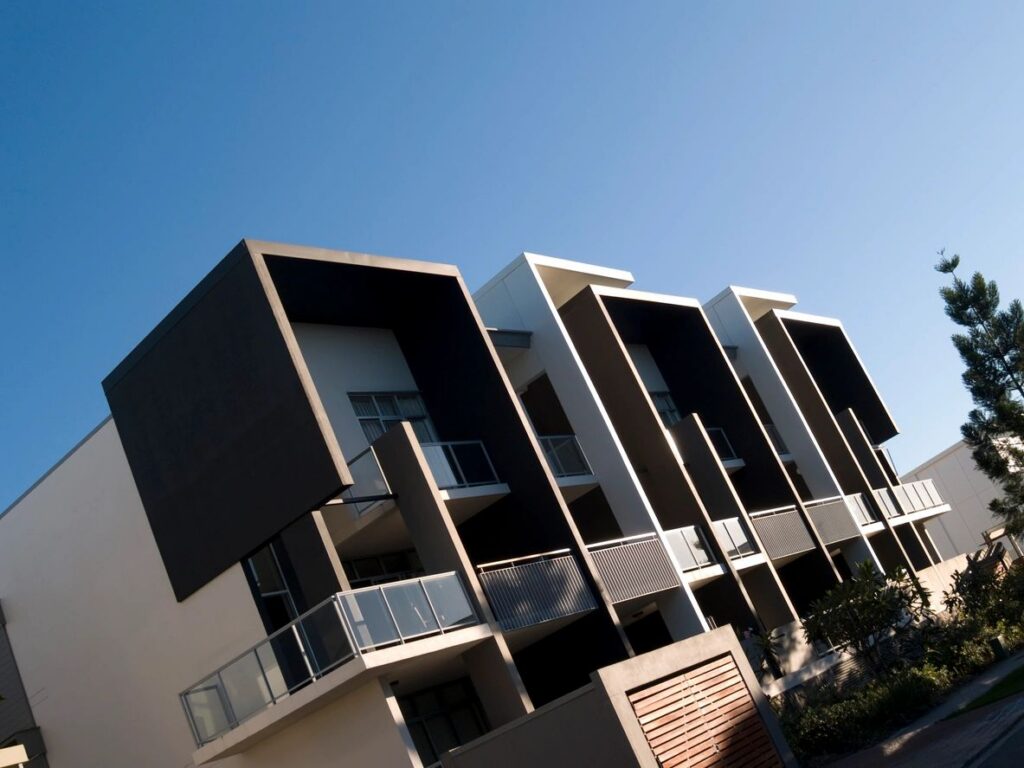
House hacking in Georgia means buying a small multi-unit property, living in one unit, and renting the others. Your tenants cover part or all of the mortgage. You get an owner-occupied loan instead of an investor loan, which is the whole point.
It is the cheapest legitimate way into real estate investing, and most first-time buyers have never heard of it.
Why the financing is the actual advantage
An investment property loan typically requires 15% to 25% down and carries a higher rate. An owner-occupied loan does not.
When you live in one of the units, you are an owner-occupant in the eyes of the lender, even though the building has tenants in it.
- FHA — as little as 3.5% down on a two to four unit property, with a 580 minimum credit score
- VA — zero down on two to four units for an eligible veteran, with no monthly mortgage insurance
- Conventional — as little as 5% down on an owner-occupied two to four unit property
So a buyer with $15,000 can plausibly purchase a duplex that an investor would need $80,000 to buy. That gap is the entire strategy.
The FHA self-sufficiency test catches people off guard
This is the rule nobody mentions until underwriting, so know it now.
For FHA loans on three and four unit properties, the property must be self-sufficient. In practice, the net rental income has to cover the full monthly mortgage payment, including taxes and insurance. If the rents do not support the payment, the loan does not work no matter how strong you are as a borrower.
Two-unit properties are not subject to that test. That is a large part of why duplexes are the most common house hacking purchase in Georgia, and why a triplex that looks like a better deal on paper sometimes cannot be financed with FHA at all.
How much of the rent actually counts
Not all of it. Lenders apply a vacancy and maintenance factor of roughly 25%, so about 75% of the gross rent counts toward qualifying.
If the second unit rents for $1,600, expect roughly $1,200 to help your file. Build your budget on that number, not the full rent. Our guide to using rental income to qualify walks through how the figure is documented and where it comes from.
House hacking in Georgia: where to actually look
Metro Atlanta has real duplex inventory, but it is uneven and you have to know where to hunt.
- Marietta and Smyrna have genuine small multi-family stock, much of it built in the 1960s through 1980s
- Austell, Mableton, and parts of south Cobb tend to offer the best price per unit
- Cherokee County is thinner on purpose-built duplexes, so look for legally converted homes and properties with permitted accessory units
- College towns such as Kennesaw, Athens, and Statesboro have steady rental demand, though turnover runs higher
Two cautions. Zoning matters, and so do HOA covenants — plenty of Georgia subdivisions prohibit renting entirely. And an unpermitted basement apartment is not a second unit. If it is not legal and reflected in the appraisal, the income generally cannot be counted, and you may have an insurance problem on top of it.
The obligations that come with it
The financing is the easy part. Here is the honest version of the rest.
You have to actually live there. FHA and VA require you to occupy the property, generally within 60 days of closing, and typically for at least a year. Buying a multi-unit with an owner-occupied loan and never moving in is occupancy fraud, not a loophole.
You become a landlord immediately. Screening tenants, collecting rent, handling repairs at inconvenient hours, and knowing Georgia landlord-tenant law are now part of your life. Some people enjoy it. Some find out they hate it.
Vacancy is real. If the unit sits empty for two months, the full payment is yours. Keep reserves. A lender may require them anyway on a multi-unit file.
Closing costs run higher than on a single-family purchase, since the appraisal is more involved and includes a market rent analysis. Our breakdown of what Georgia buyers actually pay at closing is a useful starting point, and remember Georgia is an attorney-close state.
House hacking in Georgia: a realistic example
Take a $400,000 duplex in Marietta. With FHA at 3.5% down, that is $14,000 down. Say the payment with taxes, insurance, and mortgage insurance lands near $3,100.
The second unit rents for $1,700. You are out of pocket roughly $1,400 a month for a property you own, in a market where a decent two-bedroom rental runs close to that anyway.
You are not living free. You are living at rental cost while someone else pays down your principal, and you own an appreciating asset with a tenant already in place. Two or three years later, you can move out, rent both units, and repeat.
Rates, taxes, and insurance vary, so treat that as an illustration rather than a quote. Fannie Mae publishes the conventional multi-unit standards through its originating and underwriting resources, and FHA maintains its own in Handbook 4000.1.
The bottom line
House hacking in Georgia is not a hack. It is an ordinary owner-occupied loan applied to a building with more than one door, and it is the most accessible entry point into real estate that exists for a buyer without much cash.
The tricky parts are the self-sufficiency test, the 75% rental credit, and confirming a unit is legal. All three are answerable before you write an offer.
Georgia Platinum Mortgage works with buyers across all 159 Georgia counties and compares guidelines across roughly 80 wholesale lenders, which matters on multi-unit files where overlays vary widely. Contact us today and we will run the numbers on a specific property.