
Construction-to-Permanent Loans in Georgia: The 2026 Guide
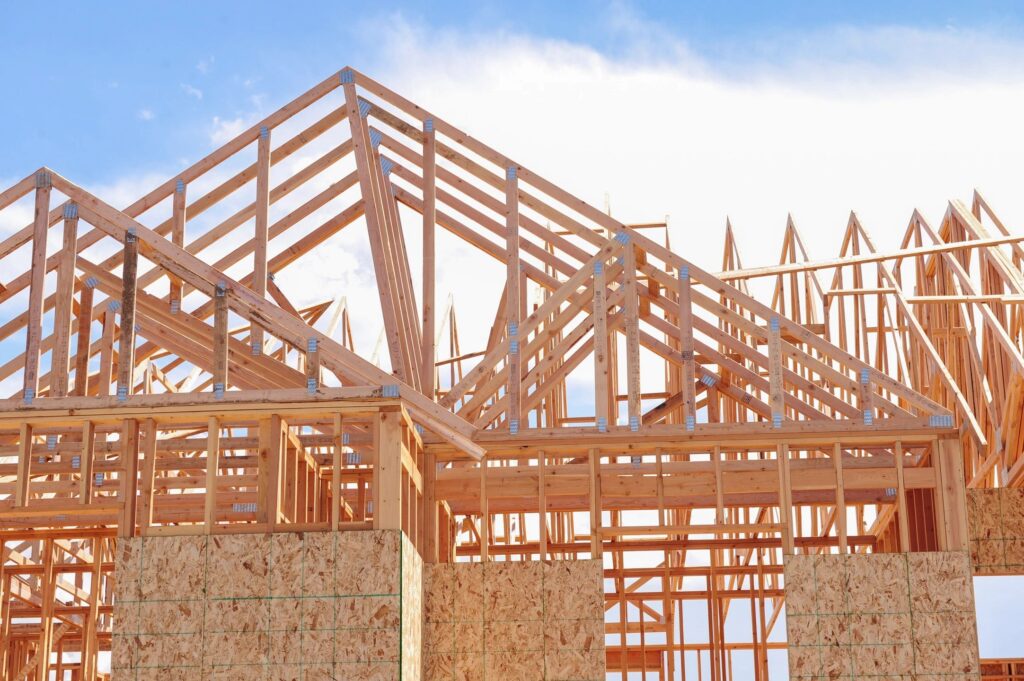
Building a house is a different financing problem than buying one. There is no property to appraise yet, no seller, and no fixed closing date — just a lot, a set of plans, and a builder’s estimate.
A construction-to-permanent loan solves this by combining two loans into one closing. During construction you draw funds in stages and pay interest only on what has been drawn. When the home is finished, the loan converts to a standard permanent mortgage without a second closing, second set of costs, or second round of underwriting. Georgia’s attorney-closing requirement and intangible recording tax both apply.
Here is how the process actually works.
How does a construction to permanent loan work in Georgia?
Two structures exist, and the difference matters.
One-time close (construction-to-permanent). You close once, before construction begins. The loan funds the build in draws, then converts automatically to permanent financing at completion. You pay one set of closing costs and are underwritten once.
Two-time close. You take a short-term construction loan, then apply separately for a permanent mortgage when the house is done. Two closings, two sets of costs, and — this is the risk people underestimate — you get underwritten twice. If your income, credit, or employment changes during the build, you may not qualify for the second loan on a house you already own.
For most people building a primary residence, the one-time close removes the risk that matters most.
The two-time-close risk is not theoretical. A build takes months. In that window people change jobs, take on a car payment, or co-sign something. Any of those can change the second approval. If you are going to build, get the permanent financing committed at the front end.
What is the difference between a one-time close and a two-time close?
Construction money is not handed over at closing. It is released in stages as work is completed.
A typical Georgia draw schedule looks roughly like this:
- Lot and site work — acquisition, clearing, grading
- Foundation — footings, slab or crawlspace
- Framing — structure and roof deck
- Dry-in — roofing, windows, exterior doors
- Mechanicals — plumbing, electrical, HVAC rough-in
- Interior — drywall, cabinets, flooring
- Final — fixtures, punch list, certificate of occupancy
Before each draw, an inspector verifies the work is actually complete. The lender releases funds to the builder, and interest begins accruing on the newly drawn amount.
What you pay during construction. Interest only, on the drawn balance, not the full loan amount. Your payment starts small and grows as the house does. Budget for that ramp — and remember that if you are renting or carrying an existing mortgage during the build, you are carrying both.
Can I be my own contractor on a construction loan in Georgia?
Construction lending is underwritten more conservatively than a standard purchase, because the collateral does not exist yet.
On you:
- Credit history meeting the program’s requirements
- Debt-to-income within program limits, counting your current housing cost during the build
- Documented income — two years of tax returns if self-employed
- Reserves after closing; construction programs often require more than a purchase would
On the project:
- A licensed, insured builder the lender will approve
- A signed, fixed-price construction contract
- Complete plans and specifications
- A detailed line-item budget
- A realistic build timeline
- Land you own, or a lot being purchased at the same closing
- An appraisal based on plans and specs — the “as-completed” value
On the builder. This surprises owner-builders. Most lenders will not approve you to act as your own general contractor on a construction-to-permanent loan, regardless of your experience. The lender is underwriting the builder’s capacity to finish on budget as much as your ability to repay.
Builder approval is the step most likely to stall a Georgia file. Lenders review the builder’s license, insurance, financial capacity, and completed-project history — and their standards differ, sometimes a lot. If you have already chosen a builder, get them submitted for approval early. Discovering at week four that a lender will not work with your builder is an expensive way to learn this.
What do you pay during the construction phase?
There is no house to appraise. The appraiser values the property “as completed,” working from your plans, specifications, and budget, compared against finished homes in the area.
Two things go wrong here.
The appraisal comes in below cost. In areas with limited comparable new construction, the as-completed value can land under what the build costs. You cover the difference in cash. This risk is highest for a home noticeably larger or more customized than what surrounds it.
Change orders. Upgrades during construction raise your cost but do not automatically raise your loan amount. Materially changing the plans can require re-approval and a new appraisal. Decide on finishes before closing, not during framing.
What can go wrong with a construction loan appraisal?
Attorney closing. Georgia requires an attorney to conduct residential closings, including construction-to-permanent loans. The attorney handles the closing, examines title, and records the security deed.
Intangible recording tax. Georgia charges $1.50 per $500 of the face amount of the note, capped at $25,000 on any single note (Georgia Department of Revenue, 2026). On a construction-to-permanent loan this is generally assessed on the full note amount, not the initial draw — worth confirming with your closing attorney at application, because it changes your cash-to-close.
Title updates. Each draw typically requires a title update to confirm no liens have been filed against the property. In Georgia, subcontractors and suppliers can file liens for unpaid work, so this check protects both you and the lender.
Lien waivers. Expect the builder to provide waivers from subcontractors and suppliers with each draw. Do not treat this as paperwork. An unpaid subcontractor can attach a lien to a house you are living in.
Loan program options
| Program | Construction-to-perm available? | Notes |
|---|---|---|
| Conventional | Yes | Most common route; 2026 baseline conforming limit is $832,750 for one-unit properties (FHFA, 2026) |
| VA | Yes, for eligible borrowers | Fewer lenders offer it; builder requirements are stricter |
| FHA | Yes | Less common; property standards apply |
| USDA | Limited | Property must be in a USDA-eligible area |
| Jumbo / portfolio | Yes | For builds above conforming limits |
Not every lender offers construction-to-permanent financing, and among those that do, guidelines diverge more than they do on standard purchases — on draw schedules, builder approval, contingency requirements, and how much of the lot value counts toward equity. Georgia Platinum Mortgage is a mortgage broker, and this is a product category where comparing across a panel of wholesale lenders tends to matter, because a file one lender declines another may approve on structure alone.
A realistic timeline
- Pre-approval and builder selection: 2–4 weeks
- Builder approval by the lender: 1–3 weeks, sometimes longer
- Plans, specs, and budget finalized: varies — this is usually the bottleneck
- Appraisal (as-completed): 2–3 weeks
- Closing: attorney coordination, same as any Georgia closing
- Construction: typically 6–12 months depending on scope
- Conversion to permanent: at certificate of occupancy and final inspection
Plan for the whole process to run longer than the build itself.
Mistakes worth avoiding
- Signing a builder contract before talking to a lender. The contract structure affects whether the loan works at all.
- Assuming you can act as your own general contractor. Most programs do not allow it.
- Underestimating the interest ramp. Your draw payments grow every month while you may also be paying rent or an existing mortgage.
- Skipping the contingency line. Most lenders require one — 5% to 10% of the budget is common. Build it in rather than treating it as padding.
- Changing plans mid-build. Change orders cost more than they appear to, and can trigger re-underwriting.
If you already own land
Land you own outright often counts toward your equity in the project, which can meaningfully reduce cash needed at closing. How much credit you get depends on how long you have owned it and how it was acquired. Bring the deed and your purchase documentation to your first conversation.
Contact us today to talk through a build. We will walk through your builder, your plans, and your timeline, and tell you which lenders on our panel structure construction-to-permanent financing in a way that fits your project.
Frequently asked questions
How much do I need to put down on a construction-to-permanent loan in Georgia?
Requirements vary by program and lender, and construction lending is generally underwritten more conservatively than a standard purchase. If you already own the lot, its value often counts toward your equity in the project, which can reduce the cash needed at closing. How much credit you receive depends on how long you have owned the land and how you acquired it.
Do I pay the intangible recording tax on a construction loan?
Georgia’s intangible recording tax generally applies, at $1.50 per $500 of the face amount of the note with a $25,000 cap. On a construction-to-permanent loan it is typically assessed on the full note amount rather than the first draw, which affects your cash to close. Confirm the treatment with your closing attorney at application.
How long does it take to build a house in Georgia?
Most custom builds run six to twelve months depending on scope, weather, and material availability. The financing process adds time on the front end — builder approval alone can take one to three weeks, and finalizing plans, specifications, and budget is usually the longest step before closing.
What happens if construction costs more than planned?
You cover overages, which is why most lenders require a contingency line of roughly 5% to 10% of the budget. Change orders — upgrades you choose mid-build — raise your cost but do not automatically increase your loan amount, and material changes to the plans can trigger re-approval and a new appraisal.
Does the lender have to approve my builder?
Yes. Lenders review the builder’s license, insurance, financial capacity, and history of completed projects. Standards vary meaningfully between lenders, so a builder acceptable to one may not be acceptable to another. Submit your builder for approval as early as possible.
What are lien waivers and why do they matter?
Lien waivers are signed documents from subcontractors and suppliers confirming they have been paid for work completed. In Georgia, unpaid subcontractors can file a lien against the property. Collecting waivers with each draw protects you from inheriting a lien on a house you are living in.
Can I get a VA construction-to-permanent loan in Georgia?
Yes, for eligible veterans and service members, though fewer lenders offer it and builder requirements are typically stricter. Because availability is limited, this is a situation where comparing across multiple wholesale lenders matters more than usual.
What happens when construction is finished?
The lender orders a final inspection, the certificate of occupancy is issued, and the loan converts to permanent financing. On a one-time close there is no second closing, no second set of closing costs, and no new underwriting — you begin making regular principal and interest payments.
Written by Wrx Kimura, Mortgage Loan Originator, NMLS #2759723 Wrx Kimura originates residential mortgages for Georgia Platinum Mortgage, a licensed mortgage broker that compares loan options across a wide panel of wholesale lenders for buyers and builders in Georgia, Alabama, Tennessee, Florida, and Texas.
Georgia Platinum Mortgage — NMLS #144366
Last reviewed: August 2026
Georgia Platinum Mortgage is a mortgage broker and does not fund loans. This article is educational and is not a loan commitment, an offer of credit, or a quote of terms. Construction lending guidelines vary by lender and change over time; confirm current requirements before relying on this article. Equal Housing Opportunity.